Making every product accessible

How Unilever scale accessible QR codes globally

Challenge

Millions of consumers who are blind or have low vision struggle to identify products, read instructions or check allergens. Unilever needed a scalable way to make packaging independently accessible while setting a new global standard for inclusion.

Approach

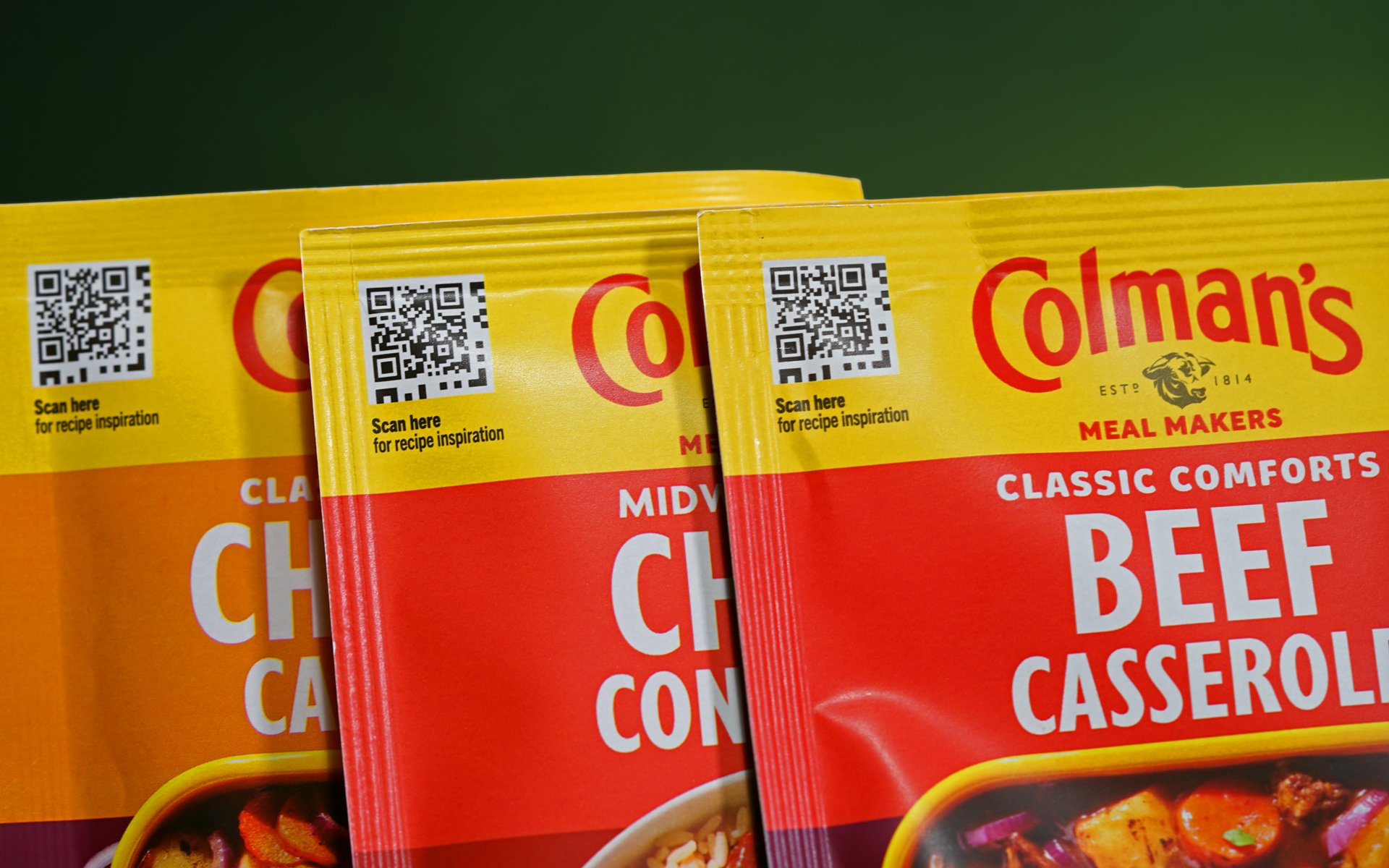
Working with Zappar and the Royal National Institute of Blind People, Unilever launched Accessible QR codes that can be detected from distance and open fully accessible voiced-product information. The Accessibility CoE trained global teams, standardised processes and embedded AQR across brands, suppliers and markets.

Business impact

Global scale

AQR expanded across multiple brands and markets, becoming one of the world’s largest accessible packaging programmes.

Stronger consumer independence

Research shows significant improvements in confidence, autonomy and brand preference among blind and low-vision consumers.

Industry influence

Unilever’s standards now shape supplier training, regulatory discussions and wider adoption across the packaging ecosystem.
A close-up photograph of three Colman’s recipe mixes in sachets, all three of different flavours. In the top left corner of each packet, there is an accessible QR code, accompanied by a text below reading ‘Scan here for recipe inspiration’. The accessible QR codes are different for each flavour.

Would you like to know more?

Speak to us about what you need help with.

Let’s make every product and place intelligent

Whether you need to meet regulation, increase engagement, or future-proof your brand for the AI era — we’ll help you get there.

Get in touch

Speak to us about what you need help with.

Mi-View360™

Our enterprise platform powering the next generation of digital products and places.

Newsletter

Turn compliance into growth with our product and accessibility regulation know-how.

CEC logo
Privacy Overview

This website uses cookies so that we can provide you with the best user experience possible. Cookie information is stored in your browser and performs functions such as recognising you when you return to our website and helping our team to understand which sections of the website you find most interesting and useful.