
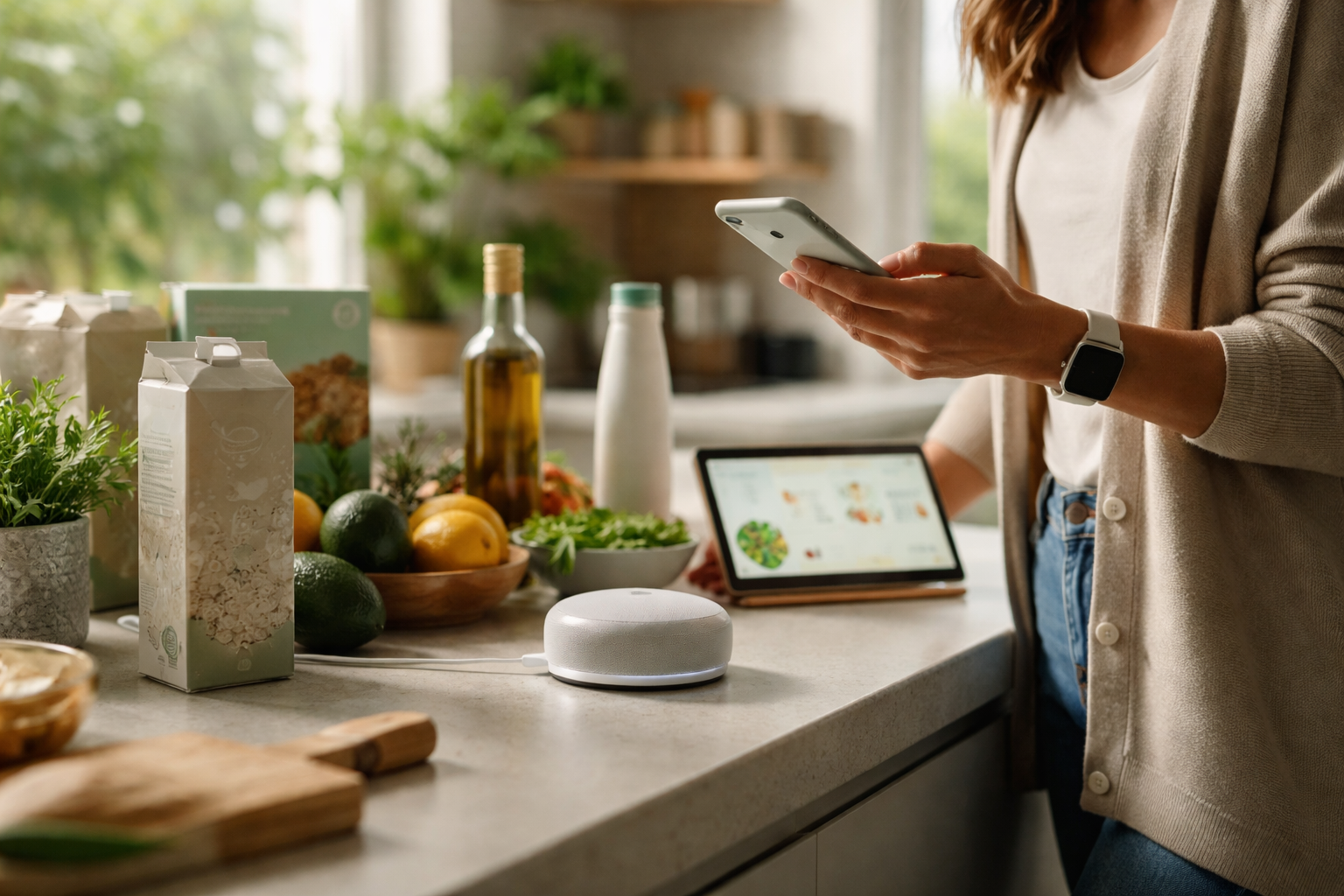
CES 2026 made one thing unmistakably clear: the consumer experience is undergoing a structural shift.
We are moving beyond the era of the connected consumer — someone who actively browses, compares and chooses — into the age of the autonomous, agentic consumer, where discovery, evaluation and purchase are increasingly delegated to AI systems across commerce, media, home, health and work.
In this world, brands aren’t only chosen by people.
They are recommended, negotiated and filtered by algorithms and agents.
That single shift changes everything.
What CES 2026 really signalled
1. AI is no longer a feature — it’s the operating model
AI has moved from a bolt-on to the way products and services run, adapt and optimise. Experiences are becoming adaptive by default, driven by continuous learning rather than static design.
2. Agentic commerce is collapsing the funnel
“Browse → compare → choose” is increasingly becoming “decide for me.”
AI agents now mediate discovery and choice, especially in retail — reshaping what visibility, trust and preference actually mean.
3. Interfaces are going multimodal and dynamic
Static screens are giving way to natural-language interfaces across watches, glasses, vehicles, home devices — and emerging form factors. The experience no longer lives in one place or one UI.
4. Homes are becoming optimised systems, not device collections
The smart home is evolving into a resilient, connected ecosystem — focused on energy, water, waste and continuity. This redefines product requirements and opens new routes to premiumisation through design and data.
5. Robotics is moving into everyday life
Beyond manufacturing, robots are appearing in companionship, entertainment, delivery and supply chains — influencing consumer interaction and expectations over time.
6. Wearables turn the body into the interface
We’re shifting from brand claims to sensor-backed proof. Health, wellbeing and performance are increasingly verified through data, not messaging.
7. AgeTech and Accessibility are growth engines
Longevity, women’s health and inclusive design are no longer niche. Accessibility and partnerships are emerging as clear routes to differentiation and trust.
What this means for connected packs, products and places
At CEC, we believe this shift fundamentally reframes the role of the physical world in digital experience.
When AI agents are mediating decisions, products and places must speak machine as well as human.
1. Connected packs become AI-readable interfaces
Packaging is no longer just a gateway to content. It is becoming a trusted data endpoint — exposing verified, structured information that AI agents can ingest, compare and recommend against.
Product pages alone aren’t enough.
Brands need serial, use-case-rich, machine-readable brand knowledge, delivered directly from the product itself.
2. Connected products must prove relevance in new ecosystems
As homes become optimised systems, products need to interact credibly with appliances, platforms and standards — introducing new requirements around data, certification and interoperability.
Relevance will increasingly be negotiated between machines, not explained to people.
3. Connected places become adaptive experience layers
Retail, hospitality, transport and public spaces are shifting from static destinations to adaptive, multimodal environments — responding to context, accessibility needs and AI-driven intent in real time. Experience design now has to account for how LLMs “see” a place, not just how people do
The new experience imperatives
CES 2026 reinforced several imperatives we see accelerating through 2026–2030:
- Build machine-readable truth, not just human-friendly stories
- Design for dynamic, multimodal interfaces, not fixed screens
- Make science verifiable, longitudinal and ecosystem-ready
- Treat accessibility and AgeTech as growth strategies, not compliance
- Deepen partnerships to understand new relevance and ranking signals
The bottom line
The shift to autonomous, agentic consumers doesn’t reduce the importance of physical products and places — it raises the stakes.
As AI agents take on more decision-making, connected packs, connected products and connected places become the primary way brands remain visible, trusted and chosen — by humans and machines.
At CEC, this is exactly where we operate: helping brands turn physical touchpoints into intelligent, accessible, machine-readable interfaces — powering the next generation of consumer experience.
The experience economy isn’t disappearing.
It’s being re-written in code, data and connectivity — starting at the product itself.